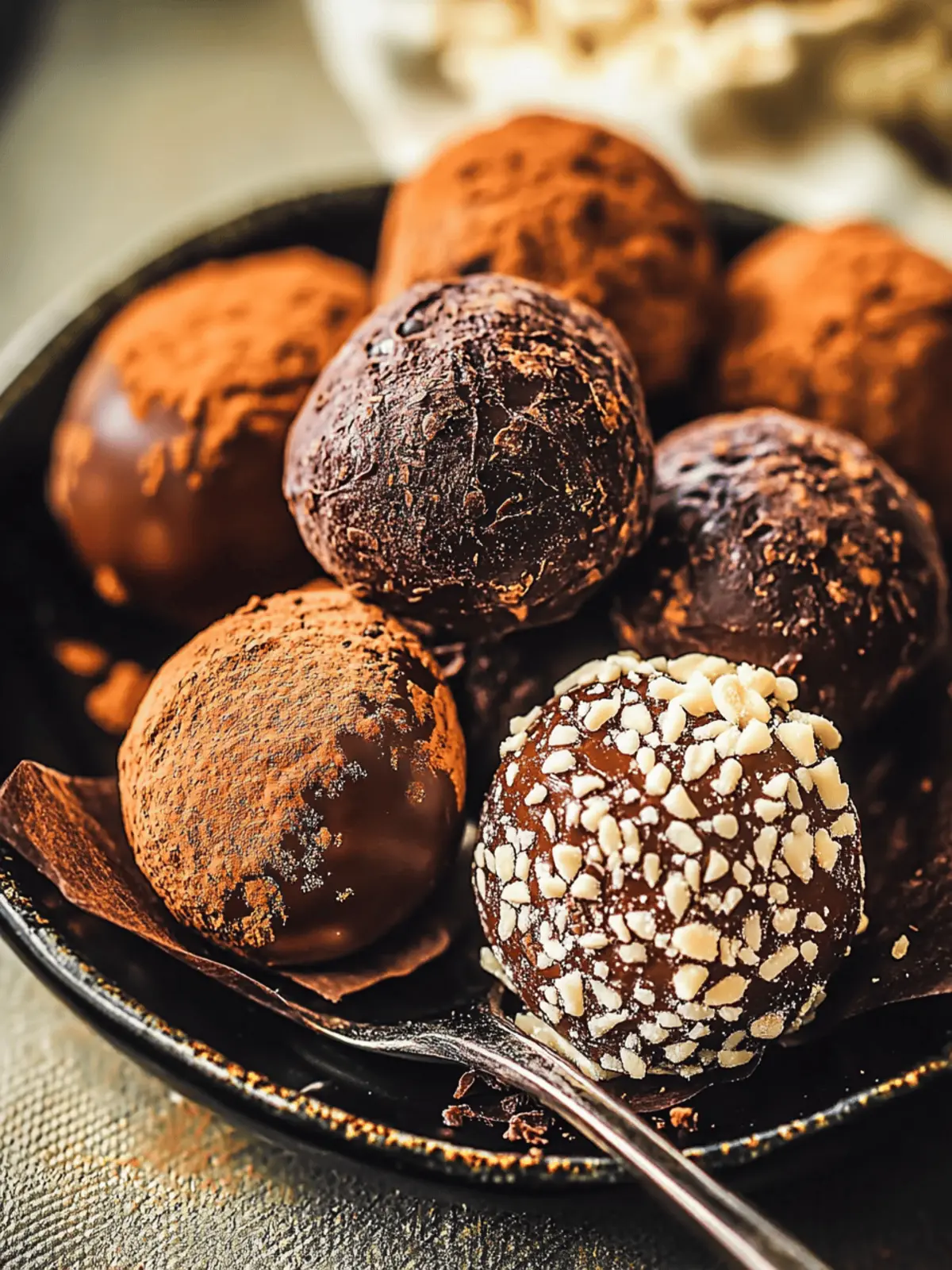
The Allure of Traditional French Dark Chocolate Truffles: A Luxurious Homemade Gift
There's a certain magic that surrounds a perfectly crafted truffle. Not just any truffle, but the kind that melts on your tongue, releasing an intensely rich, complex dark chocolate flavor, finished with a delicate dusting of bitter cocoa powder. We're talking about Traditional French Dark Chocolate Truffles – a confectionery masterpiece that embodies both simplicity and unparalleled luxury. These aren't merely chocolates; they're an experience, a moment of pure indulgence that, once tasted, is truly unforgettable.
The beauty of these sumptuous treats lies in their unassuming nature. At their heart is a sublime dark chocolate ganache – a velvety emulsion of fine dark chocolate, rich cream, and butter – which is then artfully rolled and coated. While their elegance suggests intricate skill, the delightful truth is that easy homemade dark chocolate truffles are surprisingly simple to create in your own kitchen. This makes them not only a perfect treat for yourself but also an incredibly thoughtful and impressive gift, ideal for any celebration, party, or as a sophisticated addition to a dessert table.
Imagine presenting a beautifully boxed assortment of these glistening, cocoa-dusted spheres. The recipient will be captivated by their artisanal charm, completely unaware of the relative ease with which they were made. This article will guide you through the process, helping you master the secrets to these luxurious candies and empowering you to craft your own batch of unforgettable dark chocolate truffles.
What Defines a Traditional French Dark Chocolate Truffle?
The term "truffle" in the culinary world comes from its resemblance to the prized subterranean fungi, thanks to its irregular, earthy appearance once rolled in cocoa powder. The French tradition, however, elevates this concept with a focus on core ingredients and technique. A traditional French dark chocolate truffle is typically characterized by:
- A Rich Dark Chocolate Ganache Core: This is the soul of the truffle. Made from high-quality dark chocolate (often 60% cacao or higher), heavy cream, and a touch of unsalted butter, the ganache must be smooth, stable, and incredibly flavorful.
- Pure Cocoa Powder Coating: While variations exist, the classic French truffle is rolled exclusively in unsweetened cocoa powder. This provides a delightful textural contrast and a subtle bitterness that perfectly balances the sweetness and richness of the ganache.
- Melt-in-Your-Mouth Texture: The ganache is designed to be soft enough to yield immediately upon entering the mouth, creating a luxurious, slowly dissolving sensation.
- Intense Chocolate Flavor: With minimal other flavors (sometimes a touch of vanilla or liqueur), the focus remains squarely on the depth and complexity of the dark chocolate itself.
The commitment to these simple, high-quality elements is what elevates the traditional French truffle from a mere candy to an exquisite delicacy.
Crafting the Perfect Ganache: The Heart of Your Truffles
The undisputed secret to luscious dark chocolate truffles lies in the creation of a flawless ganache. This emulsion is the foundation upon which all other elements build. While it might sound daunting, achieving a silky, smooth ganache is quite straightforward once you understand the principles.
Essential Ingredients for Superior Ganache
Quality truly matters here. Since there are so few ingredients, each one contributes significantly to the final taste and texture.
- High-Quality Dark Chocolate: Opt for a baking bar or high-quality chips with at least 60% cacao content. The higher the percentage, the more intense and less sweet your truffles will be. Brands like Ghirardelli offer excellent options, but don't hesitate to explore others. Avoid chocolate chips designed for melting in cookies, as they contain stabilizers that can affect the ganache's texture.
- Heavy Whipping Cream: This provides the necessary fat and liquid to create the emulsion. Do not substitute with lighter creams or milk.
- Unsalted Butter: A small amount of butter adds richness, a beautiful sheen, and helps create a smoother, more pliable ganache. Cut it into small pieces to help it melt evenly.
The Art of Emulsification: Step-by-Step
Making ganache is all about bringing together fats and liquids into a stable, homogeneous mixture. Here’s a generalized approach, inspired by traditional methods:
- Prepare Your Chocolate: Finely chop your dark chocolate if you're using a bar. If using chips, they're ready to go. Place the chocolate in a heat-proof bowl.
- Simmer the Cream and Butter: In a small saucepan, gently bring the heavy cream to a simmer over medium heat. You’ll see small bubbles forming around the edges. Add the pre-cut unsalted butter and stir until it's completely melted and incorporated into the cream.
- Combine and Stir: Immediately pour the hot cream mixture over your prepared dark chocolate. Let it sit undisturbed for 2-5 minutes. This allows the heat from the cream to begin melting the chocolate without scorching it.
- Stir Until Silky Smooth: After the resting period, begin gently stirring the mixture from the center outwards, using a whisk or a rubber spatula. Continue stirring slowly and steadily. At first, it might look separated or grainy, but with persistent, gentle stirring, it will transform into a gloriously smooth, glossy, and homogeneous ganache. The key is patience; avoid aggressive whisking, which can incorporate air.
- Cool and Chill: Once smooth, pour the ganache into a shallow bowl or baking dish. This helps it cool more evenly and quickly. Cover the bowl with plastic wrap, ensuring the wrap touches the surface of the ganache to prevent a skin from forming. Refrigerate for at least 2 hours, or until it's firm enough to scoop and roll. Depending on the chocolate and cream ratio, this could take up to 4 hours or more. Mastering dark chocolate truffles from ganache to perfect rolls truly begins with this crucial chilling stage.
From Ganache to Gorgeous: Rolling and Finishing Your Truffles
Once your ganache is perfectly chilled and firm, the fun begins: shaping your exquisite dark chocolate truffles. This stage allows for a bit of creativity, but maintaining the traditional appearance is part of their charm.
The Art of Rolling
The texture of the ganache will be quite firm but still pliable. The goal is to create uniformly sized, roughly spherical balls.
- Prepare Your Workspace: Have your unsweetened cocoa powder ready in a shallow dish or plate. Line a baking sheet with parchment paper for placing your finished truffles.
- Scoop and Shape: Using a small spoon, a melon baller, or a miniature ice cream scoop (typically 1-inch in diameter is ideal), scoop out portions of the firm ganache. Work quickly, as the heat from your hands can melt the ganache.
- Roll with Gentle Hands: Gently roll each scooped portion between your palms to form a roughly spherical shape. Don't worry about perfection; the rustic, irregular shape is part of the traditional appeal, mimicking natural truffles. If the ganache becomes too sticky, pop it back into the fridge for 10-15 minutes to firm up again.
The Classic Cocoa Dusting
The final touch for a traditional French truffle is the generous coating of unsweetened cocoa powder.
- Coat Thoroughly: Drop each rolled ganache ball into the dish of cocoa powder. Gently roll it around, ensuring it's completely coated on all sides. You can do a few at a time.
- Shake Off Excess: Carefully remove each truffle from the cocoa, gently shaking off any excess. Place them on your prepared parchment-lined baking sheet.
Storage and Enjoyment
Once coated, your traditional French dark chocolate truffles are ready to be enjoyed immediately! However, they also store beautifully. Refrigerate them in an airtight container for up to 2 weeks. For the best flavor and texture, allow them to come to room temperature for about 15-20 minutes before serving. This lets the ganache soften to its ideal, melt-in-your-mouth consistency.
Gifting Homemade Dark Chocolate Truffles: A Touch of Elegance
These luxurious homemade candies are truly a gift that speaks volumes. The effort, even if easy, signifies thoughtfulness, and their gourmet appeal elevates them beyond a simple box of chocolates.
- Elegant Packaging: Small confectionery boxes, lined with tissue paper or mini paper liners, are perfect. You can find these at craft stores or online.
- Ribbons and Tags: Tie a beautiful ribbon around the box and attach a handwritten tag. A simple "Handmade with Love" or "Traditional French Dark Chocolate Truffles" adds a personal touch.
- Personalized Assortments: While the classic cocoa is stunning, if you do venture into variations (like rolling some in finely chopped nuts or freeze-dried raspberry powder), a mixed box can be delightful. Just be sure to label them!
Presenting a box of your own dark chocolate truffles is not just giving a gift; it's sharing a piece of culinary artistry and a moment of pure chocolate bliss.
Tips for Truffle Perfection & Creative Variations
While the core recipe for traditional French dark chocolate truffles is elegantly simple, a few tips can ensure your success and even open doors to subtle variations.
- Temperature Control is Key: Ensure your cream is hot enough to melt the chocolate but not boiling. When chilling, ensure the ganache is firm but not rock-hard. And remember to let truffles come to room temperature before serving for optimal texture.
- Don't Rush the Chill: Patience during the refrigeration step is crucial. An under-chilled ganache will be sticky and difficult to roll, leading to frustration.
- Wear Gloves (Optional but Recommended): When rolling, wearing food-safe gloves can help prevent the ganache from melting from the warmth of your hands and keeps things tidier.
- Experiment with Chocolate: Once you've mastered the basic recipe, try different percentages of dark chocolate (70%, 80%, or even higher) to explore a wider range of flavor profiles.
- Subtle Flavor Enhancements (Non-Traditional, but Delicious): For those who wish to gently step outside the strictly traditional, a tiny splash of a high-quality liqueur (like Cointreau, Grand Marnier, or even a good quality dark rum) can be stirred into the ganache after it has cooled slightly but before it's chilled. A pinch of sea salt also beautifully enhances the chocolate flavor.
- Diverse Coatings (for the Adventurous): While traditional calls for cocoa, other delightful coatings include finely chopped nuts (pistachios, hazelnuts), shredded coconut, powdered sugar (though less common for dark truffles), or even a dusting of instant espresso powder mixed with cocoa for an extra kick.
There's an undeniable joy in creating something so luxurious and delicious from scratch. The process of making Traditional French Dark Chocolate Truffles is not only rewarding but also surprisingly meditative. Each smooth swirl of ganache, each perfectly rolled sphere, contributes to a masterpiece that brings immense pleasure to all who taste it.
So, gather your ingredients, clear your schedule, and prepare to embark on a delightful culinary adventure. You'll be astonished at how easy it is to produce such luscious, homemade truffles, and your friends and family will undoubtedly be impressed by these exquisite, luxurious gifts. Make extra, because once you’ve tasted them, you’ll definitely want some tucked away just for yourself!
